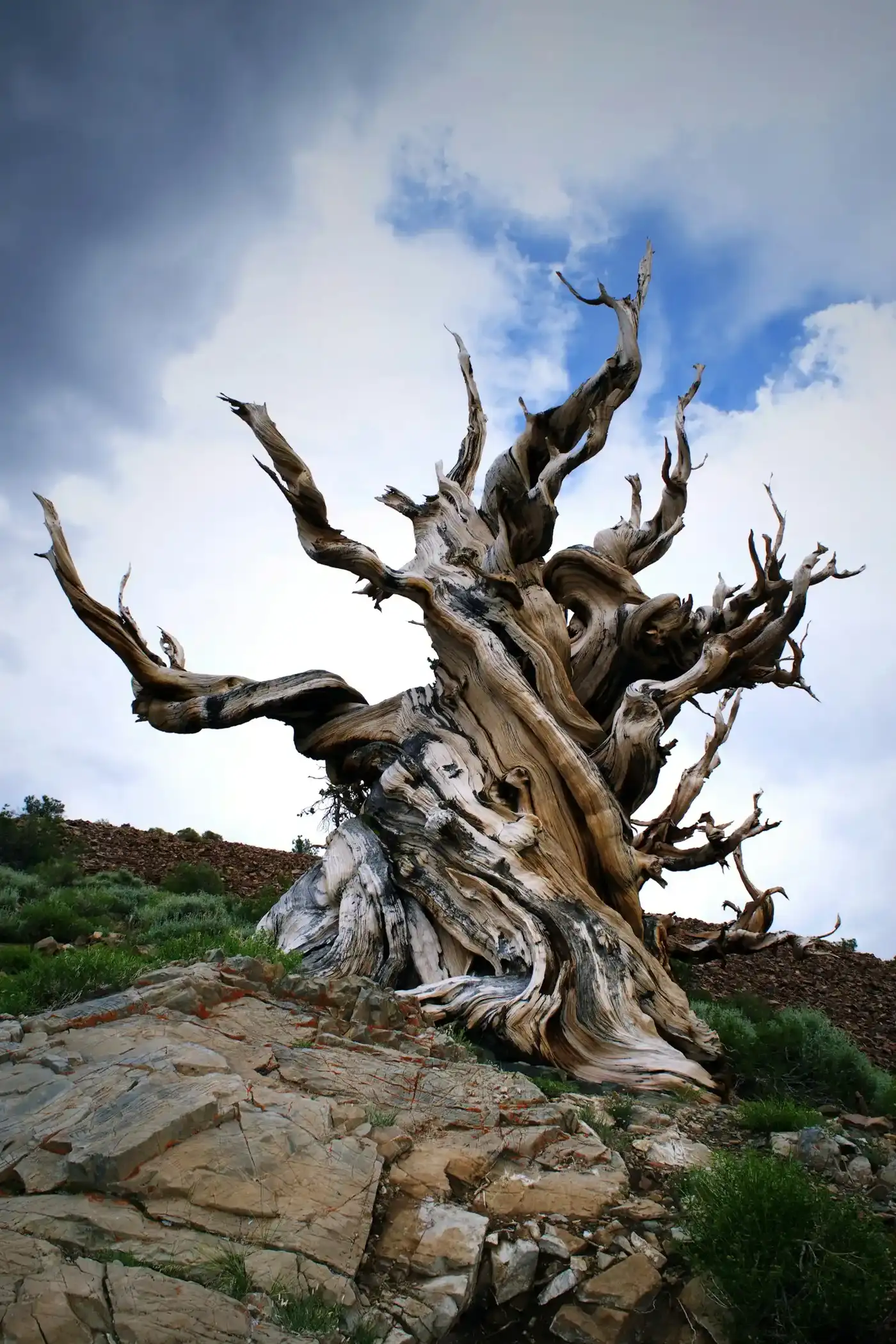
The most common signs a tree is dying in Ontario, CA are a thinning or bare canopy, branches dying back from the tips, cracked or peeling bark, fungus or soft wood at the base, small holes or sap from borers, and a lean that is getting worse. One sign alone does not mean the tree is lost. Several together, especially on a tree over a house or a play area, mean it is time for a closer look.
Canopy clues
- Leaves are smaller than usual, pale or yellow.
- The canopy is thinner than it was the season before.
- Branches have died back from the tips.
- Leaves drop early in summer, or the tree leafs out late.
- Only part of the tree leafs out.
Trunk and bark clues
- Long cracks in the trunk or between main stems.
- Bark falling away and exposing bare wood.
- Small round holes, sawdust or oozing sap, often signs of borers or bark beetles.
- Cavities, soft spots or wood that crumbles.
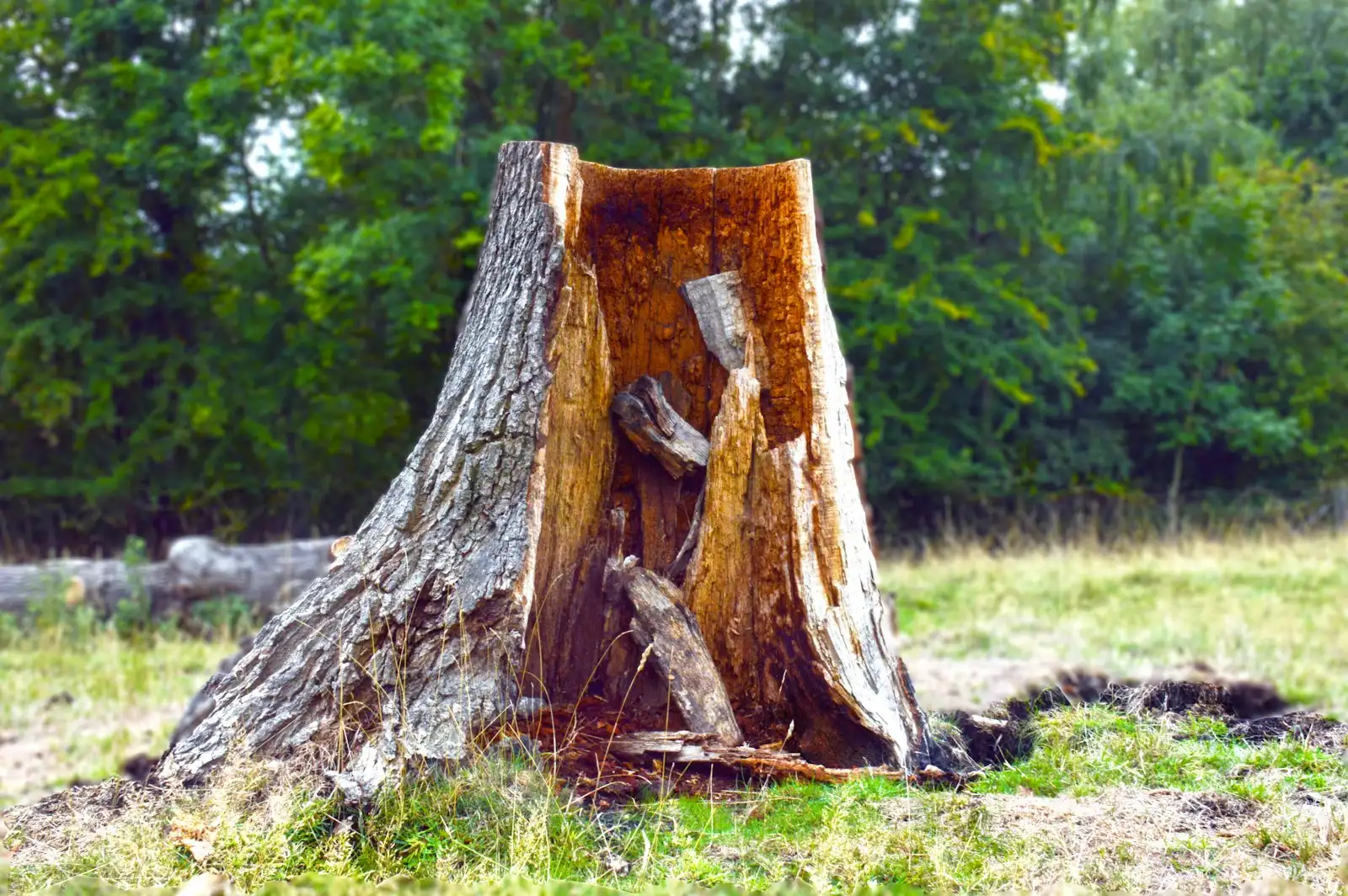
Root and base clues
- Mushrooms or shelf-like conks at the base or on the roots.
- Soil heaving or cracking on one side.
- A lean that has gotten worse recently.
- Roots cut by trenching, a new slab or a wall.
Common causes around Ontario
Hot, dry summers and Santa Ana winds put trees here under constant stress. Drought is a major one, especially on yards where lawns were removed. Overwatering causes root rot. Borers and bark beetles move into weakened pines, eucalyptus and sycamores. Old pruning wounds and topping cuts let decay in. The UC Integrated Pest Management program has research-based information on pests and diseases of California trees.
Is it dead or dormant?
In winter, deciduous trees can look dead. Scratch a small twig with a fingernail. Green under the bark means it is alive. Brown and dry means that twig is dead. Check several branches in different parts of the tree, and wait for spring growth before deciding on a deciduous tree.
What to do next
If a tree shows several of these signs, have it looked at. Often the cause can be corrected with better watering, mulch or pruning. If the tree is a hazard, removal may be the safer choice. See tree health assessment and tree removal. Older trees around places like Cucamonga-Guasti Regional Park show how long a well-cared-for tree can last. Our posts on drought-stressed trees and Santa Ana wind prep cover prevention. Call (909) 479-2614.
Species-specific warning signs
Some trees common around Ontario have their own telltale signs:
- Pines. Needles turning yellow then rusty brown from the top down, often with small pitch tubes on the bark from bark beetles.
- Eucalyptus. Sudden dieback of the canopy, holes in the trunk from borers, and heavy limb drop on hot, still days.
- Sycamores. Leaf blight in spring is common and usually not fatal, but repeated dieback and holes in the bark are a concern.
- Palms. The newest center frond wilting, bending or pulling out easily is a serious sign, often from bud rot or palm weevils.
- Citrus. Gumming sap on the trunk, yellowing and twig dieback.
When it is urgent
Some signs mean you should keep people away and call right away rather than wait: a fresh crack opening in the trunk, a tree that has suddenly started to lean, roots lifting out of the ground on one side, or a large dead limb hanging over a house, a driveway or a sidewalk.
Taking a photo of the tree from the same spot each season makes slow changes much easier to see.
Common questions
Can a dying tree be saved?
Sometimes. If the cause is drought, overwatering, compacted soil or poor pruning, correcting it can bring a tree back, especially if less than about a third of the canopy has died. Advanced decay at the base, major root damage or certain pests usually cannot be reversed, and removal is safer.
Is a dead tree dangerous?
Yes. Dead trees dry out and become brittle, and they can drop limbs or fall without warning, especially in wind. A dead tree near a house, driveway, street or play area should be removed soon. The longer it stands, the more dangerous and costly it becomes to remove.