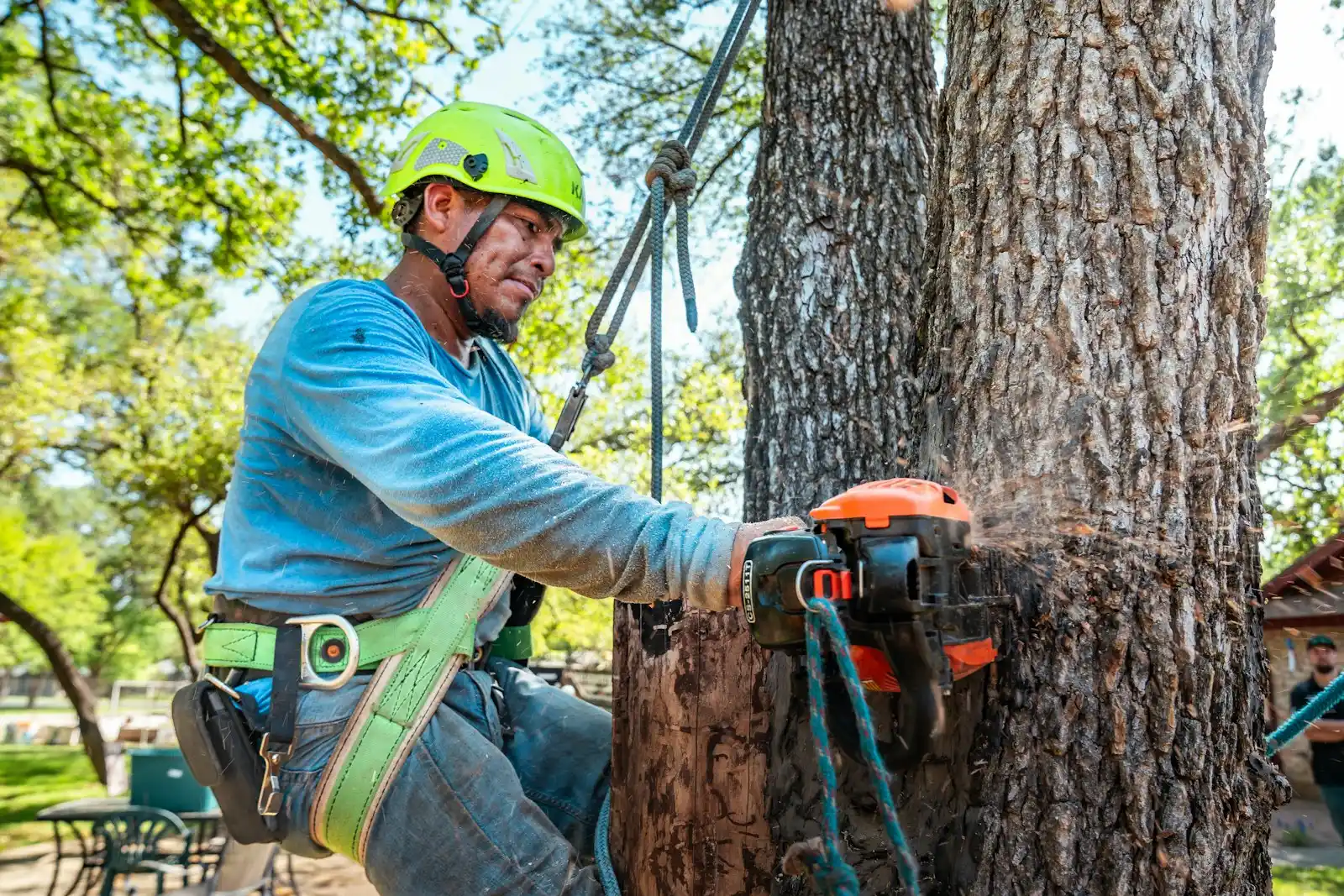
Tree removal in Ontario, CA means taking a tree down safely in pieces, chipping the brush, hauling the wood and, if you want, grinding the stump so the spot can be reused. Most residential removals are done in a single day, but a tall eucalyptus or pine over a house can take a full crew day with ropes and rigging. Before we schedule anything, we confirm whether the tree is yours or a City parkway tree, and whether it sits near SCE lines. Call (909) 479-2614 to talk through the tree you are worried about.
When a tree should come out
Removal is the last option, not the first. Many trees that look bad can be saved with pruning and crown thinning or a closer tree health assessment. These are the signs that usually mean removal is the right call:
- The tree is dead, or more than half the canopy has died back.
- A large crack runs through the trunk or between two main stems.
- The tree has started to lean more than it used to, or the soil is lifting on one side.
- Fungus, conks or soft, hollow wood show at the base or on the trunk.
- Roots are badly damaged from trenching, a new slab or a block wall.
- The species is wrong for the spot, such as a big tree planted under lines or against the house.
If you are not sure, we will tell you plainly what we see. Sometimes the honest answer is that a tree has a lot of life left.
How we take a tree down near a house
Few Ontario yards have room to drop a tree in one piece. Lots are tight, block walls run along every property line, and many trees overhang roofs, pools or a neighbor's garage. So most removals are done in sections:
- Setup. We protect lawns and hardscape with mats where the equipment travels, and mark out a drop zone.
- Limbing. A climber or a lift works from the top down, removing limbs in pieces.
- Rigging. Limbs over a roof or wall are tied off and lowered on ropes instead of dropped.
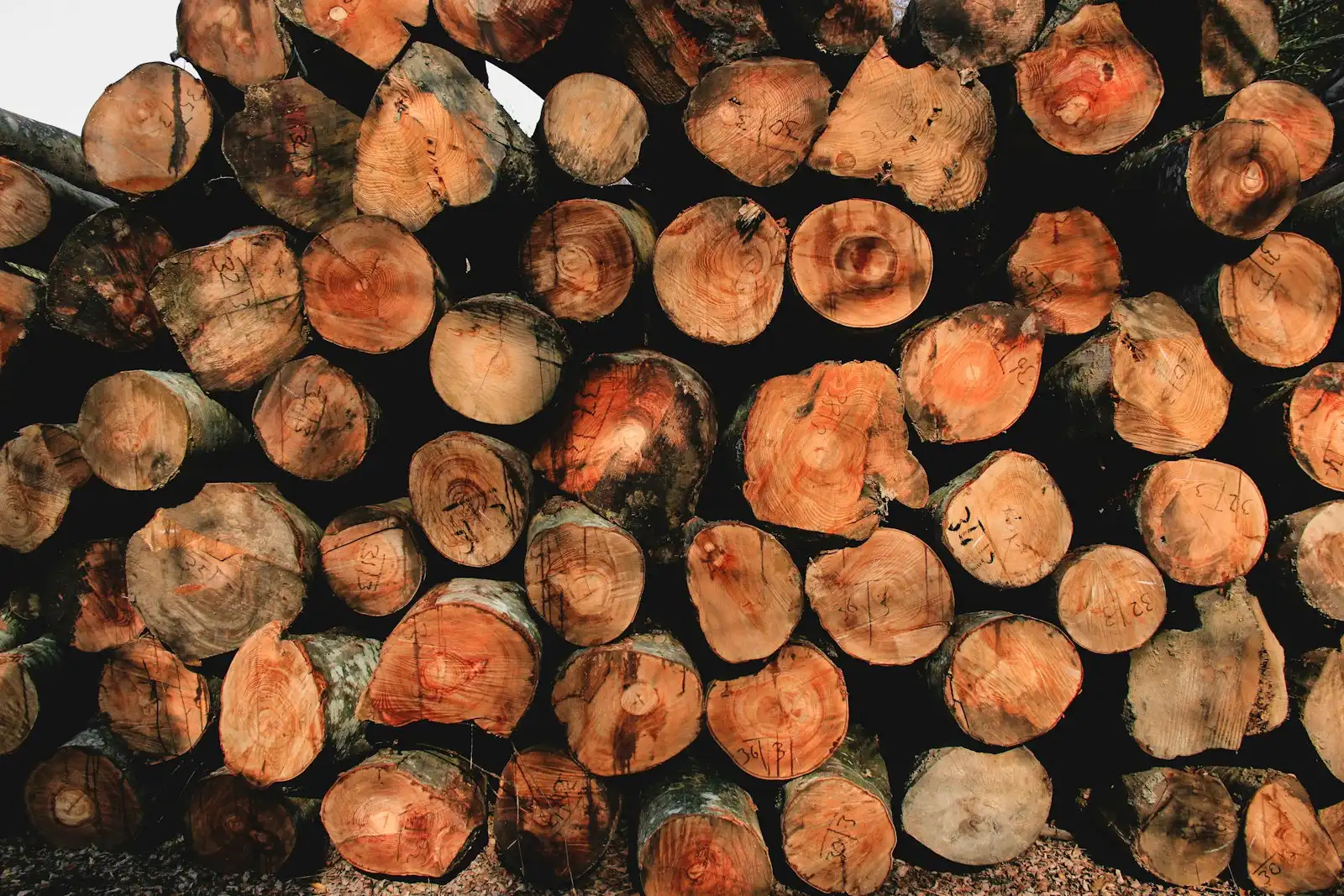
- Trunk. The trunk is cut in rounds that the crew can move safely.
- Cleanup. Brush goes through the chipper, wood is hauled or cut to firewood length, and the area is raked and blown off.
Common removals we see in Ontario
The tree stock in Ontario has a few repeat offenders. Big eucalyptus planted as windbreaks in the city's ranching and vineyard days now tower over homes along the older streets, and they drop heavy limbs without much warning. Pines and ficus push roots into walls and walks. Older California pepper trees grow wide and brittle. In newer tracts like Ontario Ranch, the issue is usually a fast-growing tree planted too close to a house. Around the busy corridors near Ontario International Airport and Ontario Mills, commercial properties often need dead or storm-damaged trees removed from parking islands and landscape strips.
Parkway trees and permits
If the tree is in the parkway between your sidewalk and the curb, it is a City tree. Ontario's code says no one may remove or relocate a parkway tree without prior authorization from Public Works, and removal is limited to hazards, dead or diseased trees, improper plantings and a few other reasons. Contact Ontario Parks and Streets Maintenance at (909) 395-2600 before anything happens to a parkway tree.
For trees on private property, check with the City of Ontario and your HOA before removing a large tree, because project conditions and covenants can apply. Nearby cities have stricter rules. Rancho Cucamonga requires a permit to remove heritage-size trees on private lots, and Chino Hills protects native oaks, sycamores and black walnuts. Our post on Ontario parkway tree rules explains who can cut what.
Trees near power lines
If any part of the tree is within 10 feet of an overhead line, or could fall into one, SCE has to be involved first. Southern California Edison asks owners to notify it before work near its lines and offers a make-safe program at no cost that cuts the tree back from the wires. Read SCE's pruning and removal FAQ or call 1-800-611-1911. Once SCE has made the tree safe, we can take down the rest.
What affects the price of a removal
Every tree is quoted on site, because the same species can be a quick job in one yard and a full day in another. These are the things that move the price:
- Height, trunk size and canopy spread.
- What is underneath: roofs, pools, walls, fences and gardens.
- Access for the chipper and whether wood must be carried through a side yard.
- Rigging needed to lower limbs instead of dropping them.
- Lines nearby, and whether SCE needs to make the tree safe first.
- Stump grinding and root grinding, quoted as a separate line.
- Whether you want the wood hauled or left as firewood.
Our tree removal cost guide goes through these in more detail.
After the tree is gone
Once the tree is down, most owners want the spot back. Stump grinding takes the stump and main roots below grade so you can lay sod, plant a new tree or pour concrete. If you plan to replant, we can talk about species that suit Ontario's heat and wind and a spot that keeps the new tree away from the house, the walls and the lines.
Common questions
How long does a tree removal take?
A small or medium tree in an open yard is usually a few hours. A large eucalyptus, pine or ficus over a house, with limbs lowered on ropes, can take most of a day. Very large or hard-to-reach trees may need a lift or crane. We give you a realistic time on the estimate after seeing the tree.
Can you remove a tree that hangs over my neighbor's yard?
Usually yes, as long as the tree is on your property and the neighbor gives access if the crew needs to work from their side. We lower limbs over the wall with ropes so nothing lands on their roof or yard. If the trunk sits on the property line, both owners should agree before any work starts.
Do you remove the stump too?
Only if you ask. Removal leaves the stump cut low to the ground, and stump grinding is a separate line on the estimate. Many owners grind right away so they can replant or lay sod. Others leave the stump for later. Either way, we explain the cost of each option before the work is scheduled.
Will the City remove a dead parkway tree?
The parkway tree belongs to the City of Ontario, so start by contacting Parks and Streets Maintenance at (909) 395-2600. Dead or diseased trees beyond correction are one of the reasons the code allows removal. Do not hire anyone to cut a parkway tree without that approval from Public Works.