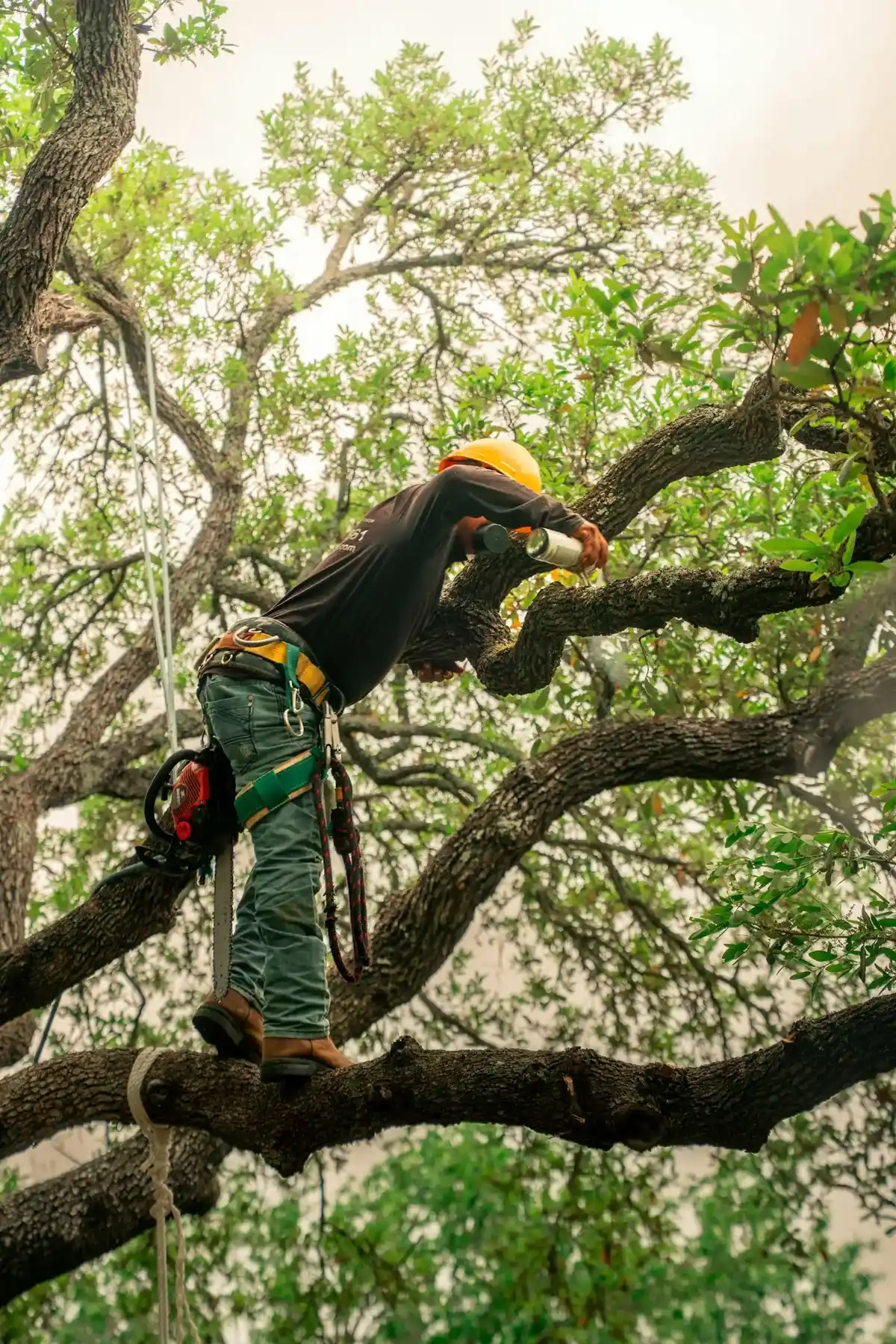
Tree trimming in Ontario, CA is the selective removal of branches to make a tree safer, healthier and better shaped, without topping it or stripping out its interior. The most common jobs are crown thinning so wind passes through, crown reduction to pull a tree back from a roof, deadwood removal, and clearance pruning over driveways and sidewalks. Good timing is late fall through winter, before Santa Ana winds arrive. Call (909) 479-2614 and tell us which trees are bothering you.
Types of pruning we do
Each cut has a purpose. We tell you which types of pruning your tree needs and why, so you are not paying for cuts that do nothing:
- Crown thinning. Removing selected branches throughout the canopy to reduce weight and let light and wind through. This is the main defense against wind breakage.
- Crown reduction. Shortening long limbs back to a healthy side branch to lower height or spread, for example where a tree overhangs a roof.
- Deadwood removal. Taking out dead and dying branches, the pieces most likely to fall on a car, a roof or a person.
- Crown raising. Removing lower limbs for clearance over walks, driveways and the street.
- Structural pruning. Shaping young trees so they develop one strong trunk instead of weak, split-prone stems.
- Clearance pruning. Pulling branches back from roofs, walls, solar panels and pool areas.
Why we never top a tree
Topping means cutting the top of a tree back to stubs. It is still common around the Inland Empire, and it causes real damage. Topped trees send out clusters of fast, weakly attached shoots that break in wind, and the large stubs decay back into the trunk. Within a few seasons the tree is taller, denser and more dangerous than before. Proper reduction cuts back to a branch that can take over the job of the limb removed. The International Society of Arboriculture's consumer site has good material on why topping is a bad idea and how pruning should be done.
We also avoid lion-tailing, where all the interior branches are stripped out and only tufts are left at the ends. It pushes all the weight to the tips and makes limbs more likely to snap.
Pruning for Santa Ana winds
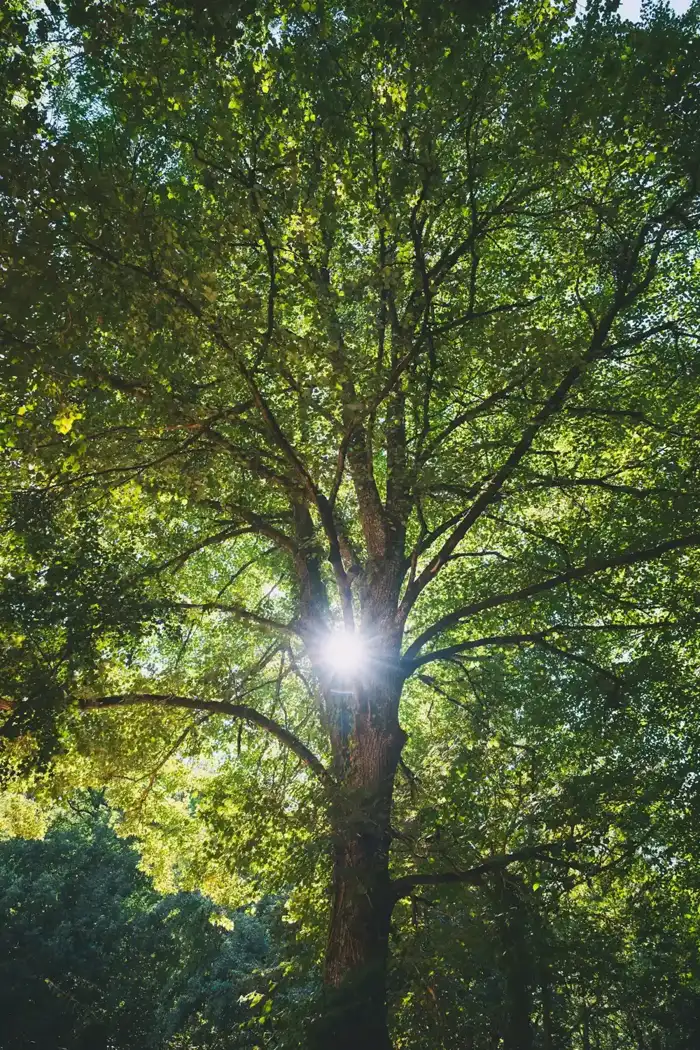
Ontario sits right in the path of the Santa Ana winds that rush down from the Cajon Pass. A dense, heavy canopy acts like a sail. Thinning before the season reduces that load, and removing deadwood takes away the pieces that would fall first. We pay closest attention to species that break easily in wind here: eucalyptus, pepper trees, Aleppo and Canary Island pines, ficus and Chinese elms. Our Santa Ana wind prep guide covers the warning signs to look for.
Ontario's trees and what they need
Ontario has some of the most recognizable trees in the region. The California pepper trees in the median of the Euclid Avenue Historic District are a reminder of how much the city's early planners valued shade. Many older homes near Euclid Avenue and Grove Avenue still have big peppers, sycamores and eucalyptus that need regular thinning. Around Cucamonga-Guasti Regional Park and the neighborhoods near it, you see mature pines and shade trees on large lots. In Ontario Ranch, young street and yard trees benefit most from structural pruning early, which saves money and trouble later.
Parkway trees and power lines
Parkway trees are City property. Ontario expects owners to keep about eight feet of clearance over the sidewalk, while the City handles major pruning and anything that cannot be pruned from the ground. For bigger pruning on a parkway tree, contact Ontario Parks and Streets Maintenance. In HOA tracts, the association usually takes care of parkway trees.
Branches within 10 feet of an overhead line are off limits to anyone but a qualified line-clearance crew. Call SCE at 1-800-611-1911 first. Our guide to trees near power lines explains SCE's process.
How much to remove at once
Removing too much living canopy at once stresses a tree, especially in summer heat. As a general rule we avoid removing more than about a quarter of the live canopy in a single season on a mature tree, and less on stressed or older trees. If a tree needs major reduction, we may plan it over two visits. Heavy pruning in a heat wave is not something we recommend.
Pruning across the Inland Empire
We prune trees across Ontario and nearby cities, including Upland, where the City and its contractor handle all street trees, and Claremont, where city and easement trees need a Community Services permit. If a tree is beyond saving, we talk about tree removal. If the problem is palms, see palm tree trimming.
On commercial properties, such as offices and retail centers near Ontario Mills, we also prune for clear sightlines at driveways and signs, and for clearance over parking stalls and walkways.
Common questions
How often should trees be trimmed in Ontario?
Most mature shade trees do well with pruning every two to four seasons, depending on the species and how fast it grows. Fast growers like eucalyptus, ficus and pepper trees may need more frequent thinning. Young trees benefit from light structural pruning more often. We set a schedule based on the tree, not a fixed calendar.
Is crown thinning the same as topping?
No. Crown thinning removes selected branches throughout the canopy and keeps the natural shape, so wind passes through. Topping cuts the top back to stubs, which causes weak regrowth and decay. We thin and reduce trees using proper cuts back to healthy branches, and we do not top trees.
Can you trim trees over my roof and solar panels?
Yes. Clearance pruning pulls branches back from roofs, gutters and solar panels so leaves do not pile up and limbs do not rub. We reduce limbs back to side branches instead of cutting stubs, so the tree stays healthy. If the branches are also near service lines to the house, SCE may need to be called first.
When is the best season for tree trimming here?
Late fall through winter is best for most shade trees, because they are dormant and the structure is easy to see. It also prepares them before the strongest Santa Ana winds. Light deadwood removal can be done any time. We avoid heavy pruning in summer heat waves, when trees are already short on water.