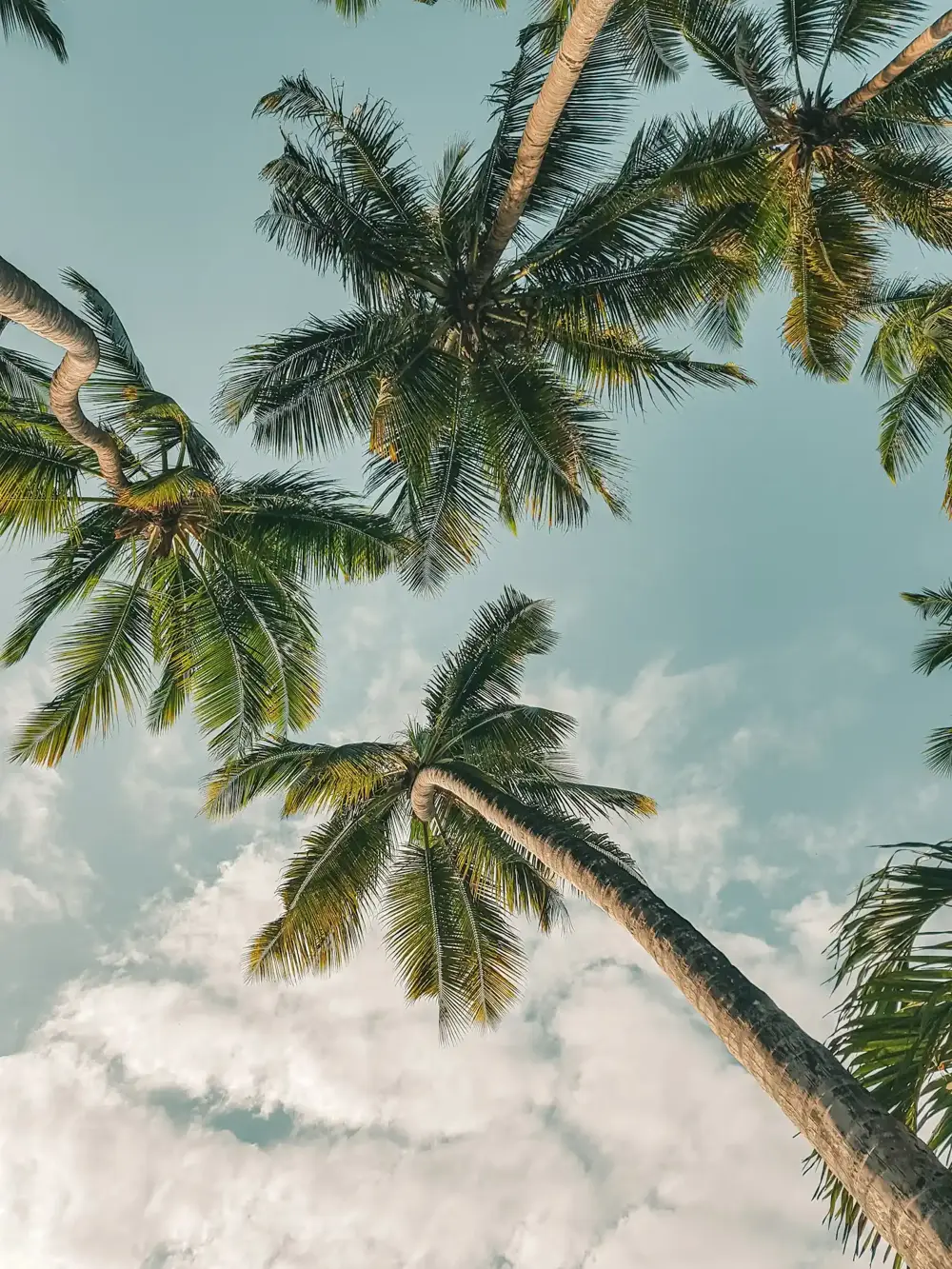
Palm tree trimming in Ontario, CA removes dead and dying fronds, flower stalks and seed pods so a palm stays tidy, safe and clear of the heavy dry skirt that catches embers and shelters rats. Mexican fan palms usually need trimming once a year, and Canary Island date palms need careful work around their thorns and heavy fronds. We trim only what is dead or dying and do not over-cut. Call (909) 479-2614 and tell us how many palms you have and roughly how tall they are.
What palm trimming includes
A palm trim is different from pruning a shade tree. Palms grow from a single bud at the top, so every cut is made with that bud in mind:
- Dead frond removal. Brown and hanging fronds are cut close to the trunk.
- Seed pod and flower stalk removal. Pods are removed before they drop fruit and seeds onto pools, patios and cars.
- Skinning. Old frond bases, called boots, are removed from the trunk for a clean look on fan palms.
- Date palm cleaning. Canary Island date palms are trimmed into a rounded "pineapple" at the top of the trunk.
- Cleanup. Fronds are cut down and hauled away, since they are bulky and full of spines.
How much to trim
The most common mistake with palms around the Inland Empire is over-trimming, sometimes called a "hurricane cut," where everything but a few top fronds is removed. Green fronds feed the palm. Removing them weakens it, thins the trunk near the top and can make it more prone to breaking in wind. We remove fronds that are dead or hanging well below horizontal, and leave the healthy green crown. Our palm trimming schedule guide covers timing in more detail.

Why we do not use spikes on healthy palms
Climbing spikes punch holes in a palm's trunk. Palms cannot heal those wounds the way other trees can, and the holes stay open to pests and disease. For healthy palms, we work from a lift or use climbing methods that do not wound the trunk. Spikes are used only on palms that are coming down.
Palms, wind and fire
Palms are part of the look of Ontario, from the tall Mexican fan palms on older streets near Euclid Avenue to the palms in front of homes and businesses in Ontario Ranch and around Ontario Mills. In Santa Ana winds, a skirt of dry fronds can tear off and blow into streets, pools and power lines. Dead fronds are also highly flammable, which is why fire agencies recommend removing them. The CAL FIRE defensible space guidance treats dead vegetation near homes as a priority to clear. See defensible space tree work for more.
Palms near power lines
Fan palms can grow well over 60 feet, and many in older Ontario neighborhoods now reach the lines. SCE assesses palms near its lines because fronds can blow into the wires. If a palm is within 10 feet of a line, or its fronds could reach one, SCE must be called first at 1-800-611-1911. Our guide to trees near power lines explains how that works.
Palm removal
When a palm is dead, leaning, too tall for the spot or a problem near the house, we remove it. Tall fan palms are taken down in sections, with the crown lowered first and the trunk cut into rounds. Palm stumps are fibrous and break down differently from other trees, and they can be ground like any other stump grinding job. If you want a shade tree in its place, we can talk through options.
Palm trimming across the area
We trim palms throughout Ontario and nearby cities, including Eastvale, where many HOA neighborhoods have rows of palms, and Montclair. If other trees in the yard need work at the same visit, see tree trimming.
Fan palms and date palms
The two palms we see most around Ontario need different care. Mexican fan palms are tall and slender, with a skirt of brown fronds that builds up quickly if no one trims it, and their small dark fruit stains patios and cars. Canary Island date palms are shorter and much heavier, with long fronds lined with sharp spines near the base, which makes trimming them slow and careful work. Queen palms, common in newer yards, drop messy fruit clusters and often show nutrient problems in the heat. Each one gets a trim suited to how it grows, and we tell you which palms on your property need attention now and which can wait.
Rats, bees and palm skirts
A thick skirt of dead fronds is a favorite home for roof rats, and bees sometimes build hives in it. We check for both before climbing, and if bees are present we will ask you to have them removed first.
Common questions
How often should palm trees be trimmed?
Most Mexican fan palms need trimming about once a year, when the lower fronds have browned and seed pods have formed. Canary Island date palms are often trimmed once a year or every other season. Trimming more often than needed, or removing green fronds, weakens the palm, so we set the schedule by how the palm looks.
What is palm skinning?
Skinning removes the old frond bases, often called boots, that stay attached to the trunk after fronds are cut. It gives fan palms a clean, smooth trunk. It is done carefully so the trunk tissue is not cut into. Some owners prefer to leave the boots, which is fine for the palm's health.
Why are my palm's fronds turning yellow?
Yellowing can come from normal aging of the lowest fronds, lack of water, nutrient shortages such as potassium or manganese, or pests and disease. If the yellowing is in the middle or top of the crown, or the newest frond looks wilted, that is a warning sign. A closer look tells you which one it is.
Can you remove a very tall palm near the house?
Yes. Tall palms near a house are taken down in sections, with the crown lowered first and the trunk cut into short rounds, so nothing falls on the roof. If the palm is close to power lines, SCE must make it safe first. We plan the cuts and the drop zone before starting.