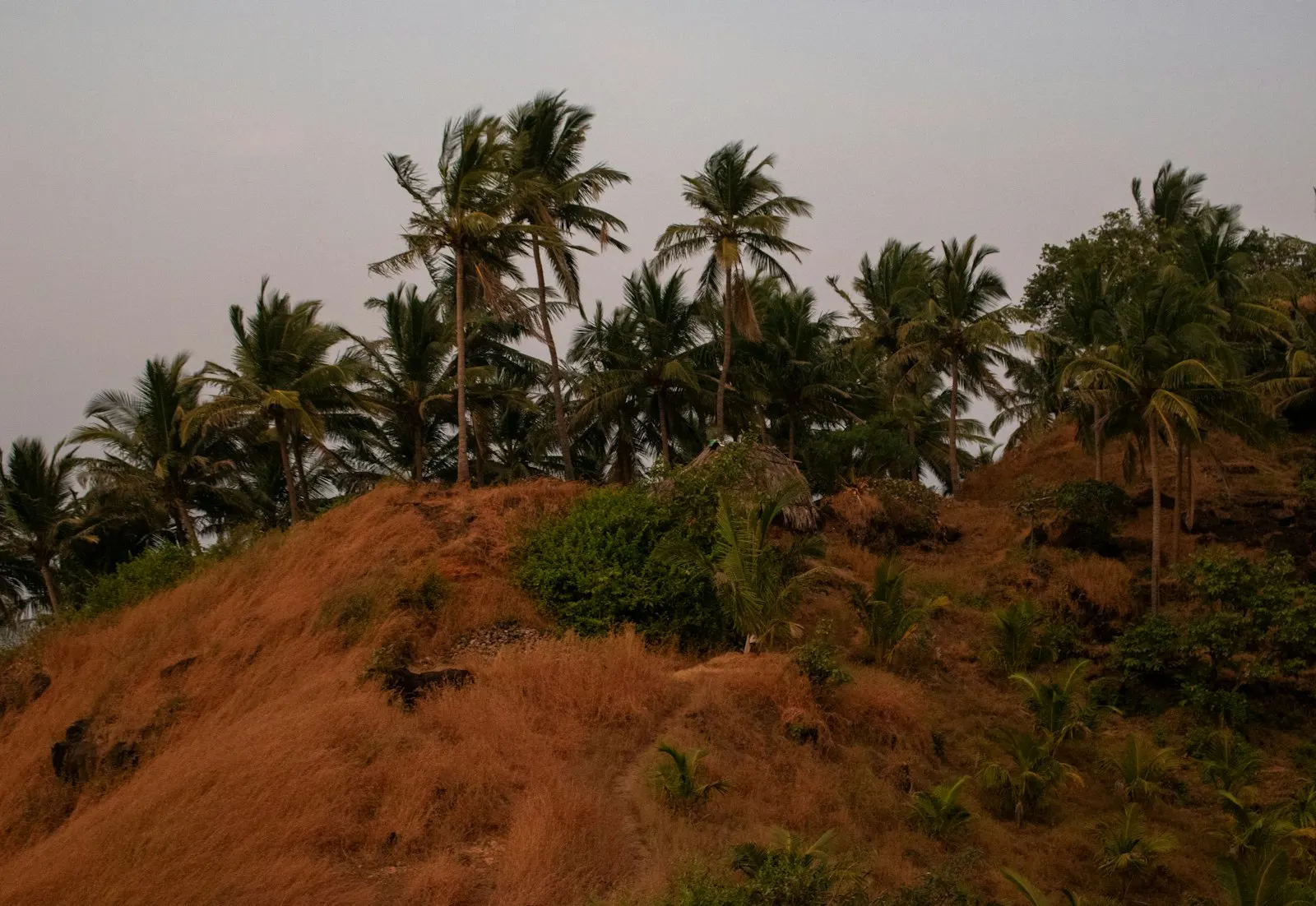
Most palm trees in Ontario, CA need trimming about once a year. Mexican fan palms are usually trimmed when the lower fronds have browned and seed stalks have formed, and Canary Island date palms once a year or every other season. Remove only dead and dying fronds, flower stalks and seed pods, and leave the healthy green crown. Over-trimming weakens palms and makes them more likely to break in wind.
Why palms are different
Palms do not grow like other trees. They grow from a single bud at the top of the trunk, and they do not form new wood to seal wounds. Every green frond is feeding the palm. That is why the old habit of cutting palms back to a few top fronds, sometimes called a hurricane cut, does more harm than good. It starves the palm, can thin the trunk just below the crown and leaves the bud more exposed.
Mexican fan palms
The tall, slender palms that line many older streets around Ontario, from the Euclid Avenue corridor to Mountain Avenue, are mostly Mexican fan palms. They grow fast and can top 60 feet. Left alone, they build a thick skirt of dead fronds down the trunk. That skirt shelters rats, can hold bees and is very flammable. Trimming once a year, after the lowest fronds have browned, keeps them clean. Skinning, which removes old frond bases from the trunk, is optional and mostly a matter of looks.
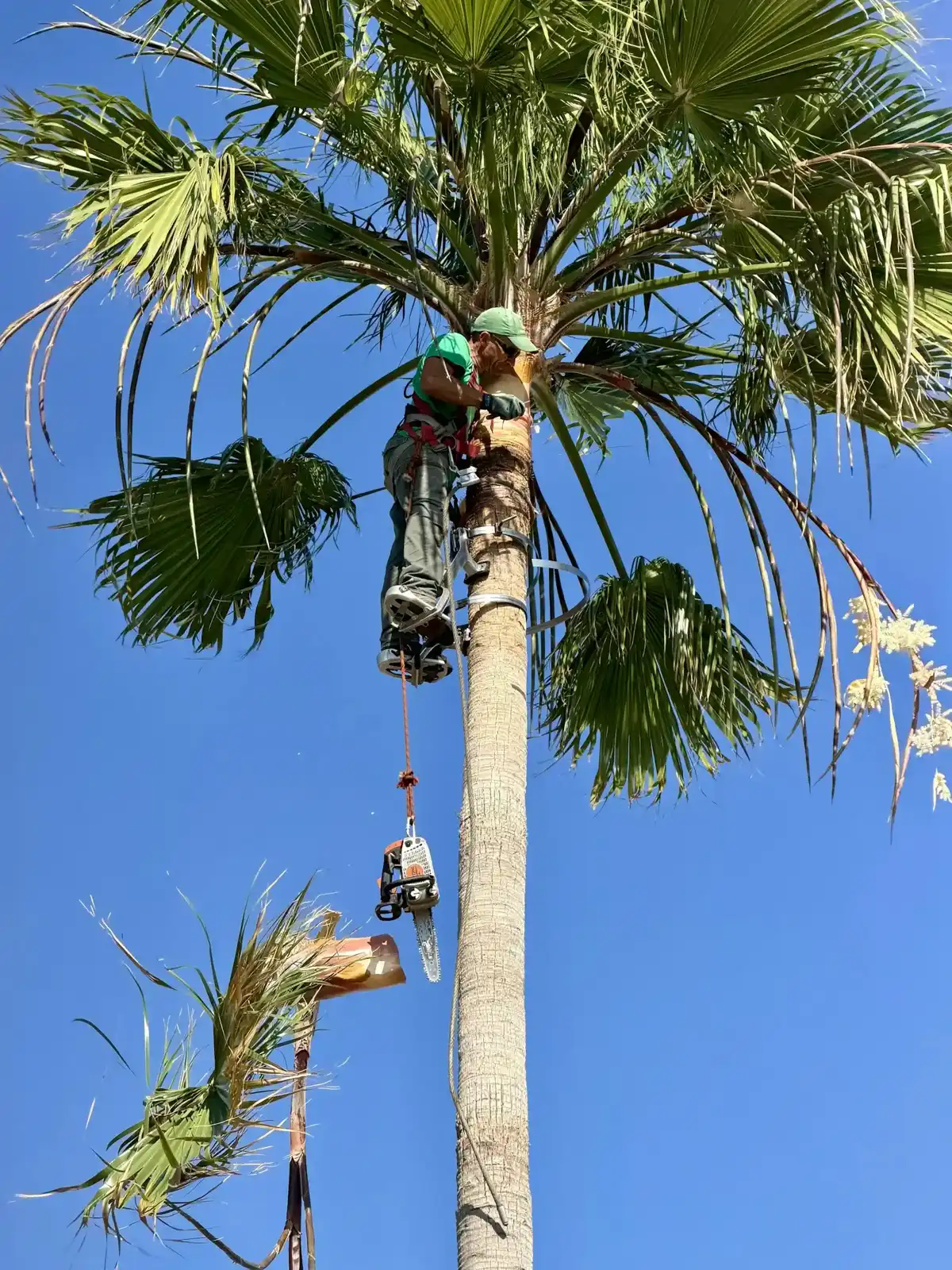
Canary Island date palms
These are the big, heavy palms with a thick trunk and a large round crown. Their fronds are long and lined with sharp spines near the base. They are usually trimmed once a year or every other season, with dead fronds removed and the top of the trunk shaped into a rounded "pineapple." The spines make this slow work, and cleanup takes care.
Queen palms
Queen palms are common in newer yards. They drop heavy clusters of orange fruit that stain patios and pool decks, so removing flower stalks during trimming saves a lot of cleanup. They are also prone to nutrient problems in the heat.
Signs it is time to trim
- Several fronds are brown and hanging below horizontal.
- Seed stalks or fruit clusters have formed and are starting to drop.
- The frond skirt is thick enough to hide rodents or catch embers.
- Fronds are touching the roof, a wall or a line.
Signs of over-trimming
If a palm looks like a feather duster with only a few fronds pointing straight up, it has been over-trimmed. It will recover if left alone, but it needs time. A good rule is to leave the fronds that are green and above horizontal.
Safety near lines
Many tall palms in older Ontario neighborhoods now reach overhead lines. If any part of a palm is within 10 feet of a line, call SCE at 1-800-611-1911 before trimming. Our post on trees near power lines explains SCE's process.
Fire safety
Dead fronds burn easily, and CAL FIRE's defensible space guidance treats dead vegetation near homes as a priority. Our defensible space zones guide explains where palms fit in.
To schedule a trim, see palm tree trimming or call (909) 479-2614. If a palm is dead or too tall for the spot, see tree removal.
Best months to trim
In Ontario, many owners trim fan palms in late spring or early summer, after flowering and before fruit drops, and again check them before Santa Ana season in the fall. Date palms can be trimmed any time of year, but avoid wet periods when fresh cuts are more exposed to disease.
Common questions
Can I trim my palm myself?
Short palms with fronds you can reach from the ground can be trimmed carefully with a pruning saw. Tall palms are dangerous to climb, fronds are heavy and date palm spines cause injuries. Never use a ladder against a palm trunk, and never trim near power lines. Leave tall palms to a crew with the right equipment.
Do palms need fertilizer?
Many palms in the Inland Empire show signs of potassium or manganese shortage, such as yellowing or spotted older fronds and frizzled new growth. A palm fertilizer with slow-release potassium and micronutrients can help. Do not remove yellowing lower fronds too early, because the palm is drawing nutrients back from them.