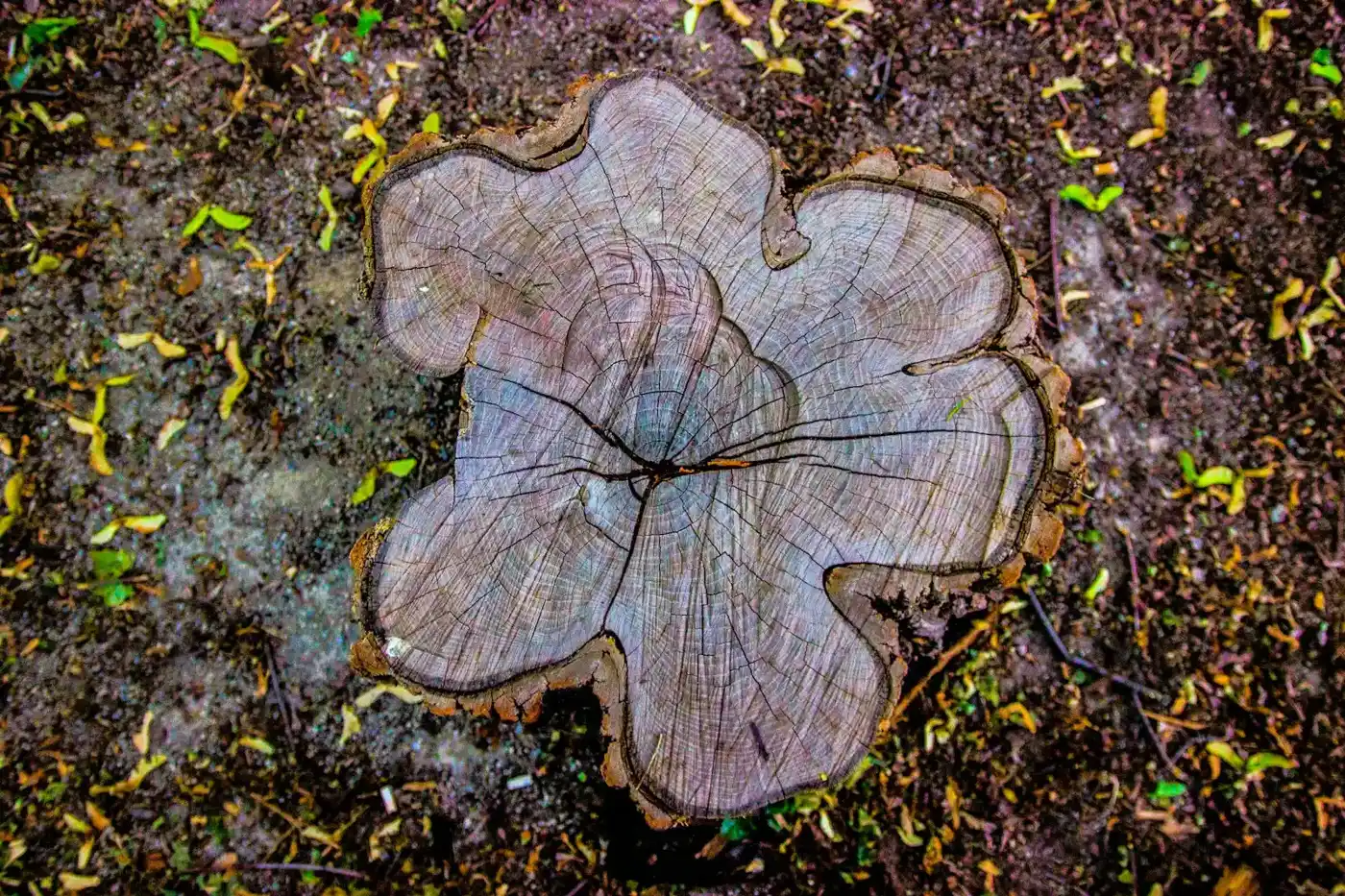
Stump grinding in Ontario, CA uses a grinder with a toothed cutting wheel to chew a stump and its main surface roots into chips below the soil line. It is faster and far less destructive than digging a stump out, and the hole can be filled with soil and planted or covered with sod. Most residential stumps are done in an hour or two. We have underground lines marked before grinding deep near utilities. Call (909) 479-2614 and tell us how many stumps you have and how big they are.
Why grind a stump instead of leaving it
A stump left in the yard is more than an eyesore. These are the most common reasons owners call:
- It is a trip hazard and gets in the way of mowing.
- It takes up space you want for a new tree, a planter or a patio.
- Some species, such as ficus, elms and eucalyptus, keep sending up sprouts from the roots.
- Decaying stumps can attract termites and other wood-boring insects.
- Roots near a slab, wall or walkway can keep pushing until they are cut back.
If a tree was just removed, grinding at the same visit saves you a separate trip. Many of our tree removal jobs include it.
How stump grinding works
We bring a grinder sized to the job and the access. Narrow side yards in Ontario often call for a compact machine that fits through a gate. The process looks like this:
- Check for lines. For deep grinding, we have the area marked through USA North 811 so gas, water and electric lines are found before we start.
- Clear the area. We remove rocks, cut the stump low with a saw and set up guards to catch flying chips.
- Grind. The wheel sweeps side to side, taking the stump down below grade and following the main surface roots outward.
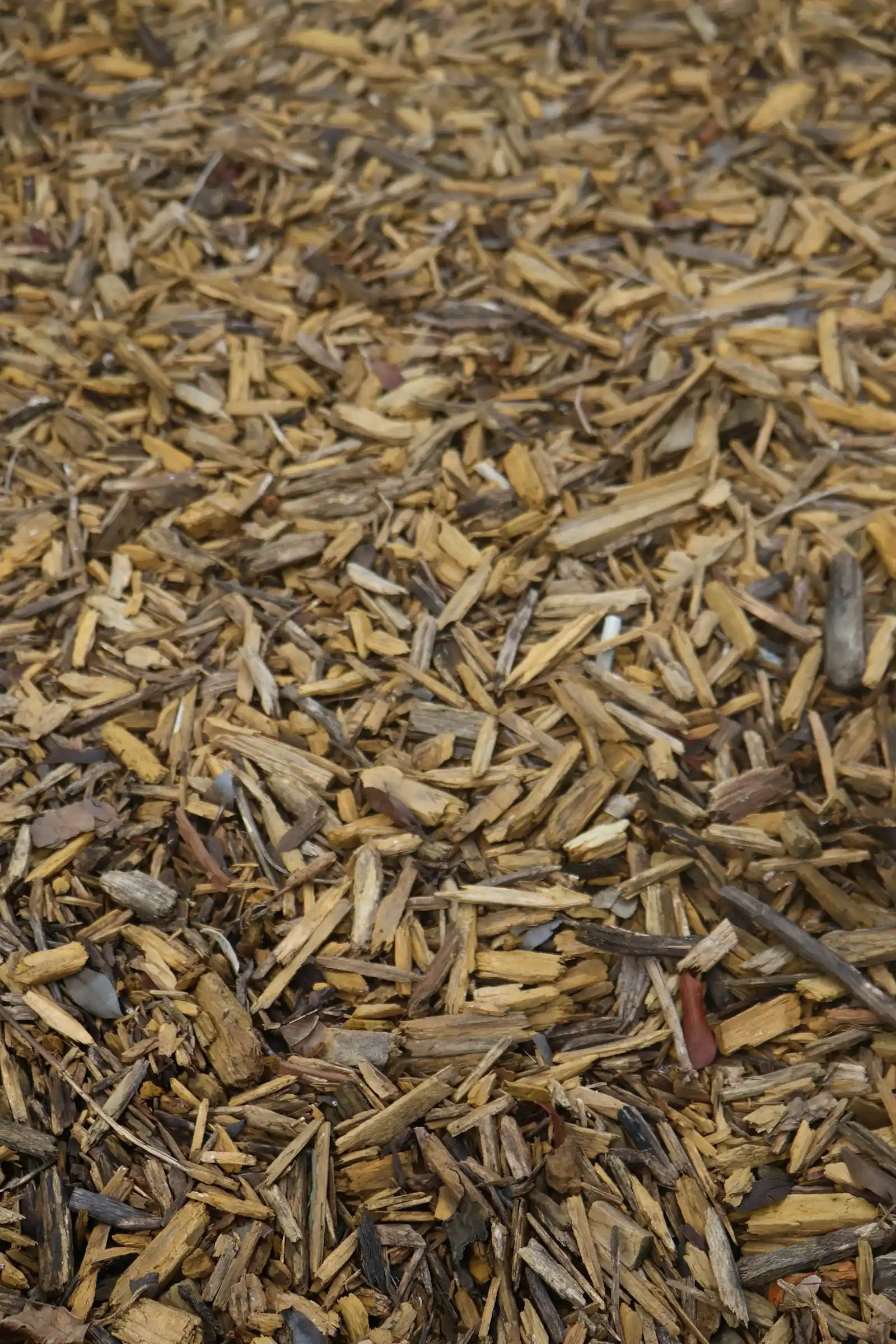
- Clean up. The chips can stay in the hole as a base, be raked into the soil or be hauled away.
How deep we grind
For most lawns and planting beds, grinding a few inches below grade is enough to lay sod or plant shrubs. If you plan to plant a new tree in the same spot, or pour concrete over it, we grind deeper and remove more of the root mass. We set the depth with you before starting so the result matches your plans. Grinding does not remove every root in the soil. The remaining roots break down over time.
Roots near walls, walks and slabs
Ontario's older neighborhoods around Euclid Avenue and Grove Avenue often have large pines, ficus or eucalyptus that pushed roots under walks and block walls long before they were removed. Grinding the surface roots near those structures takes away the pressure. We take care near footings and slabs, and if a wall or walkway already cracked, we will tell you so it can be checked separately.
Stumps in parkways and HOA areas
A stump in the parkway, between the sidewalk and the curb, belongs to the City, because the tree was a City tree. Contact Ontario Parks and Streets Maintenance about parkway stumps rather than grinding them yourself. In HOA communities, ask the association first, since it often maintains the parkway and common areas.
Common stump jobs around Ontario
We grind stumps on single-family lots across Ontario, in Ontario Ranch backyards where builders left old orchard stumps, and on commercial lots near Ontario Mills and the warehouse districts south of the airport. We also grind stumps after storm damage, where a tree came down in a Santa Ana wind event and the stump needs to go before a fence or wall is rebuilt.
Grinding versus full removal
Full stump removal, where the stump and root ball are dug out with an excavator, is rarely needed for a home yard. It leaves a large hole, disturbs the soil and can damage nearby irrigation and hardscape. It makes sense mainly for new construction or a foundation. Our post on stump grinding versus stump removal compares the two.
Stump grinding in nearby cities
We grind stumps throughout the area, including Chino, where many older ranch properties have stumps from old windbreaks, and Fontana, where large lots often have several. If you are clearing a whole yard or lot, see land and lot clearing.
What to do with the spot afterward
Once the stump is gone, the question is what goes there next. For lawn, we recommend removing most of the chips, filling with topsoil, tamping it and leaving it slightly mounded, since the soil settles as the remaining roots break down. For a new tree, plant a little off the old spot so the new roots are not fighting old wood.
If you have several stumps from past removals scattered around the yard, we can grind them all at one visit, which is usually cheaper per stump than calling for each one separately.
Common questions
How long does stump grinding take?
A typical residential stump takes an hour or less once the grinder is set up. Very large stumps, stumps with big surface roots or several stumps in one yard take longer. Access matters too. If the grinder must go through a narrow side gate, we bring a compact machine, which works more slowly but fits.
What happens to the wood chips?
The chips can stay in the hole as a base for topsoil, be spread as mulch in planting beds or be hauled away. Fresh chips from a stump are not ideal to plant directly into, so if you plan to replant or lay sod, we usually recommend removing most of the chips and filling with soil.
Can you grind a stump next to a wall or fence?
Yes, in most cases. Compact grinders can work close to walls, fences and walks. We grind carefully near block wall footings and slabs, and we may leave a small amount of wood right against a structure to avoid damaging it. If a wall is already cracked from roots, we will point that out.
Will the tree grow back after grinding?
Most species will not regrow once the stump and main roots are ground below grade. A few, such as ficus, elms and some eucalyptus, may send up sprouts from remaining roots. Those can be cut or pulled as they appear, and they usually stop within a season.