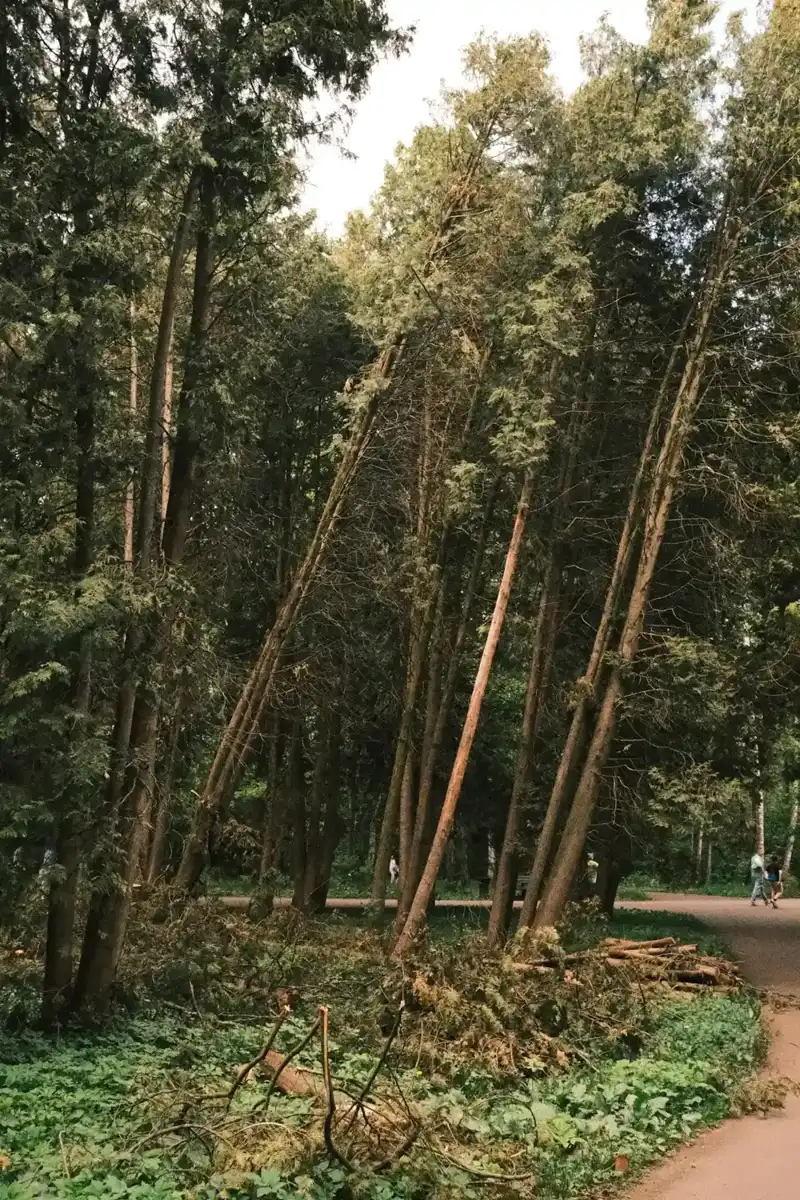
To get trees in Ontario, CA ready for Santa Ana winds, remove dead branches, thin dense canopies so wind can pass through, trim dead palm fronds and have any tree with a crack, a growing lean or damaged roots checked before the season. Santa Ana events usually run from fall into early spring, and the trees that fail are almost always the ones with a defect you could see beforehand.
Why Santa Ana winds are so hard on trees
Santa Ana winds blow from the northeast, down through the Cajon Pass and across the valley floor, which is the opposite of the usual ocean breeze. Trees grow their strongest wood against the winds they usually face, so a strong wind from the other direction loads them in a way they are not built for. The air is also hot and very dry, which stresses trees already short on water. The National Weather Service in San Diego issues wind advisories and high-wind warnings when strong events are expected.
Pruning before the season
- Deadwood removal. Dead branches are the first to fall. Removing them is the single most useful step.
- Crown thinning. Removing selected branches throughout the canopy lets wind pass through instead of pushing on a solid sail.
- Reduction of heavy limbs. Long, heavy limbs over a roof or driveway can be shortened back to a healthy side branch.
- Palm cleanup. Dead fronds tear off in wind and fly into yards, pools and lines.
Avoid topping. It produces weak, fast regrowth that breaks even more easily. Our tree trimming page explains the difference.
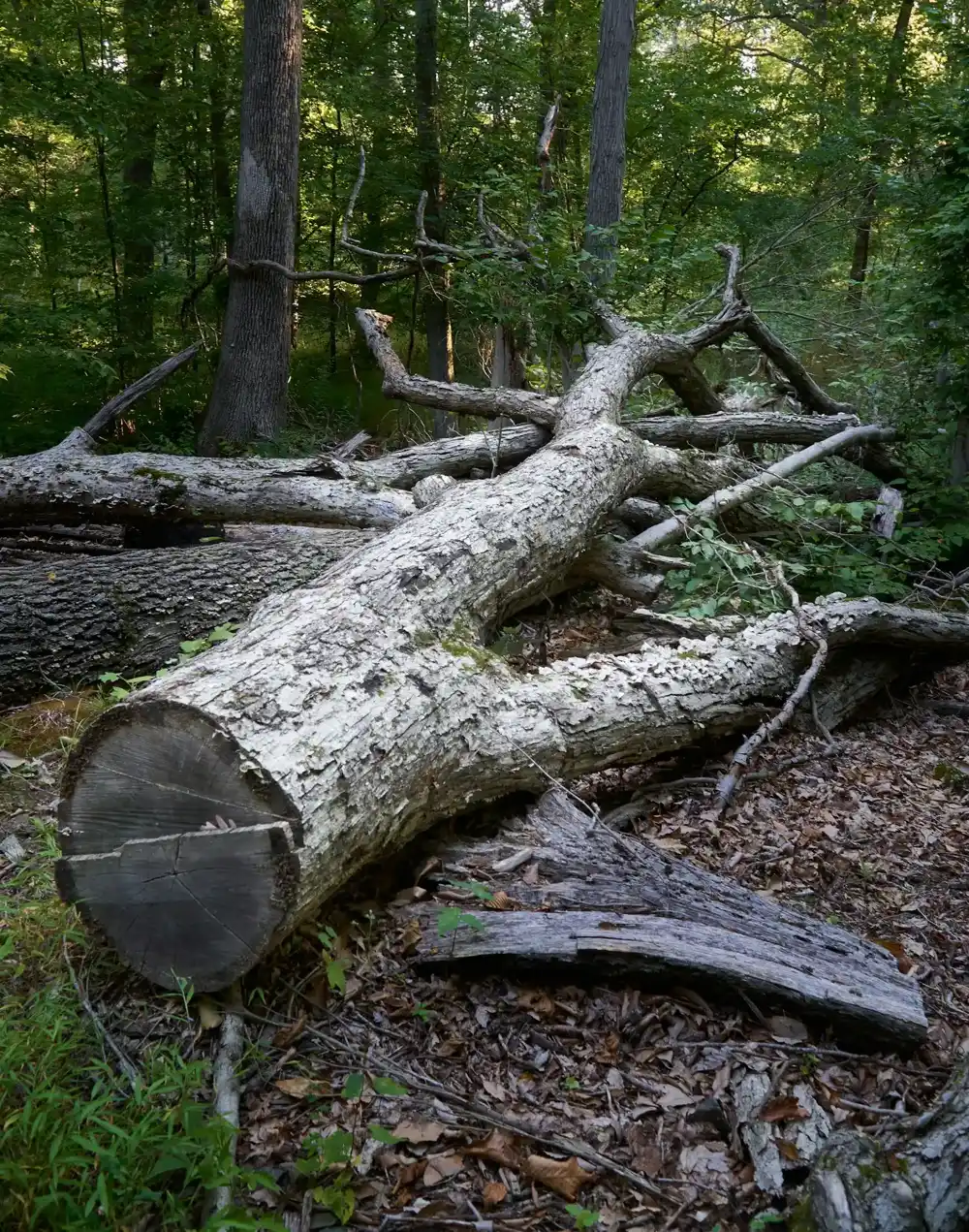
Warning signs to look for
Walk around each large tree and look for:
- Dead branches or a canopy that has thinned out.
- Cracks in the trunk, or between two main stems joined in a tight V.
- Mushrooms, conks or soft wood at the base.
- A lean that has gotten worse, or soil heaving or cracking on one side.
- Roots cut by trenching, a new wall or a slab.
- Limbs already broken and hanging in the canopy.
Any of these on a tree over a house, a car or a play area deserves a closer look before the next wind event. Our post on signs a tree is dying covers more.
Trees that fail most often here
In Ontario and nearby cities, the trees we most often see down after a Santa Ana event are tall eucalyptus, Aleppo and Canary Island pines, pepper trees, ficus and Chinese elms. Older trees on streets around the Euclid Avenue corridor and Grove Avenue have seen many wind seasons, and many carry old pruning wounds or decay. Fontana and Rialto, closer to the pass, see even stronger gusts.
Watering matters
Drought-stressed trees break more easily. If your lawn was replaced with gravel or drought-tolerant plants, mature trees may have lost the water they relied on. A slow, deep soak at the edge of the canopy every few weeks during the dry months helps. See our guide to drought-stressed trees.
During and after the wind
- Stay indoors during strong gusts and park cars away from large trees.
- Never go near a downed line. Call SCE at 1-800-611-1911.
- After the wind dies down, walk the property and look for hanging limbs, new cracks and lifted roots.
- Photograph any damage before moving anything.
If a tree has come down, see emergency tree service, or call (909) 479-2614 for storm damage.
Keep this list handy and walk your property at the start of every fall.
Common questions
When is Santa Ana wind season?
Santa Ana events most often occur from fall through early spring, with many of the strongest in late fall and winter. They can happen outside those months too. Plan pruning and deadwood removal for early fall, before the first big events, and watch National Weather Service advisories.
Will thinning a tree really help in the wind?
Yes, when it is done properly. Thinning removes selected branches throughout the canopy so wind passes through rather than pushing against a dense mass. Combined with deadwood removal and reduction of heavy limbs, it lowers the load on the tree. Overthinning or topping makes things worse, so cuts should be selective.
Should I remove a tree because I am worried about wind?
Not necessarily. Many trees can be made much safer with pruning. Removal makes sense when a tree has a serious defect, such as a large crack, advanced decay or a worsening lean, and it stands over a house or other target. Have the tree looked at before deciding.